
Behind the Boards: Inside the Pro Climbing League's Debut Event
A behind-the-scenes account from Magazine London, 28 February 2026
Elite climbing has always celebrated the people on the wall. The Pro Climbing League, however, needed people behind it. Specifically, it needed a crew who could strip and reset multiple sets of competition boulders in ten minutes flat, live on stage, in front of a sold-out crowd and a RedBull TV broadcast reaching viewers worldwide. No pressure.
I was one of those people, and this is what it looked like from the other side of the stage.
Sheffield, Tuesday 24th February - Rehearsal
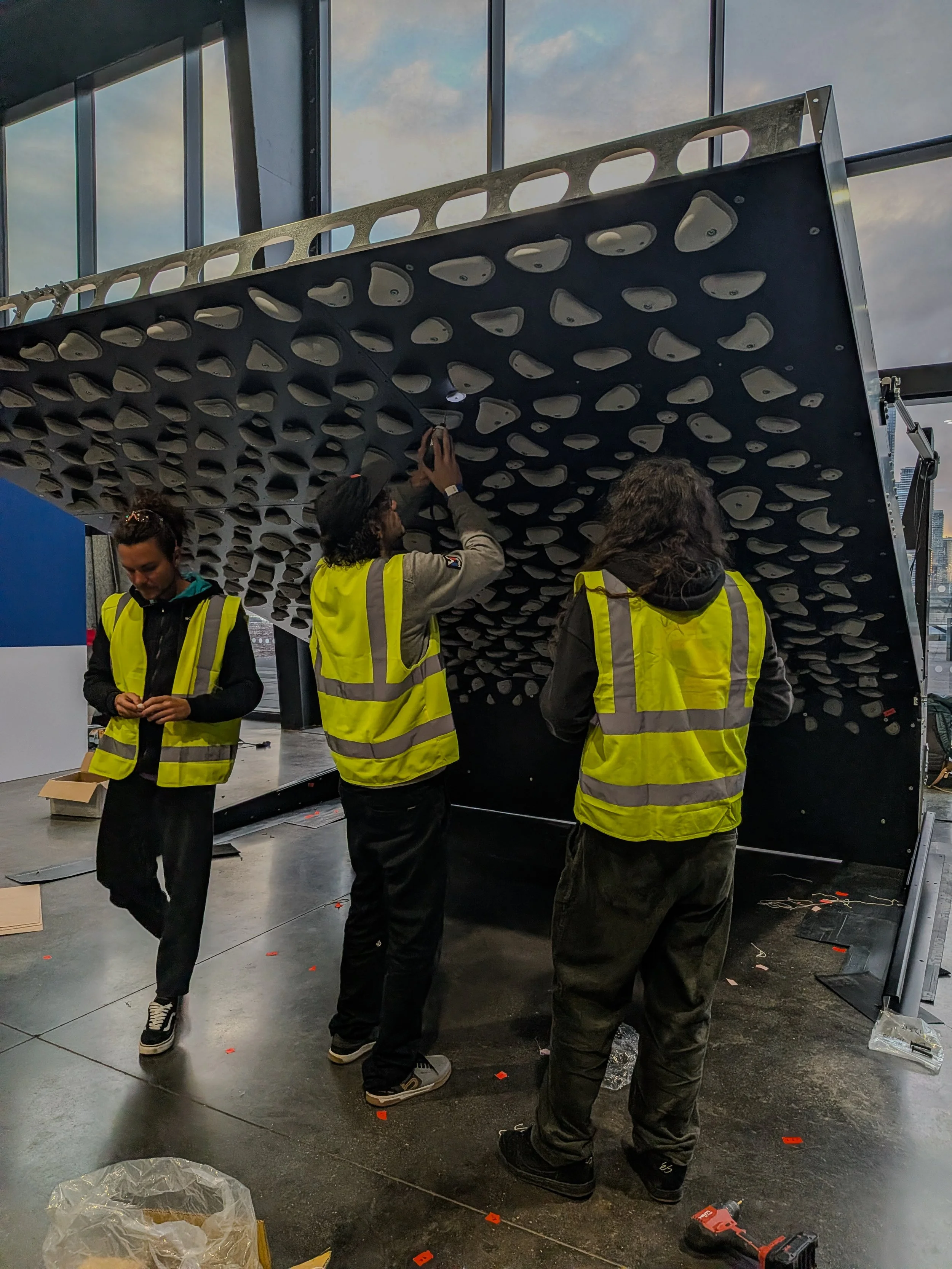
The changeover crew assembled at the Core Climbing office and warehouse in Sheffield four days before the event. The main setting team — overseen by Kilter’s Jackie Hueftle as Director of Routesetting, with Head Setter Sergio Verdasco and setters Maelys Agrapart, Matt Birch and Stefan Scarperi — had been working on the competition boulders for the week prior. Today was our chance to understand the format, see the finished problems, and start drilling what would become our core task: the ten-minute live changeover.
Our crew was a mixed group. A contingent from LCC London (including myself) brought finals-level setting experience to the table, a few freelance setters, and the set-prep team from City Bouldering; less versed in the precision work of competition changeovers — specifically, placing holds back onto a wall to align with multiple coloured pen markers, each set corresponding to a different round. It was a skill gap that would require a lot of reps to close. Jackie, showing that this big event wasn’t her first rodeo, had sourced doubles and triples of the entire competition hold selection — an insurance policy against anything breaking in transit or during practice.
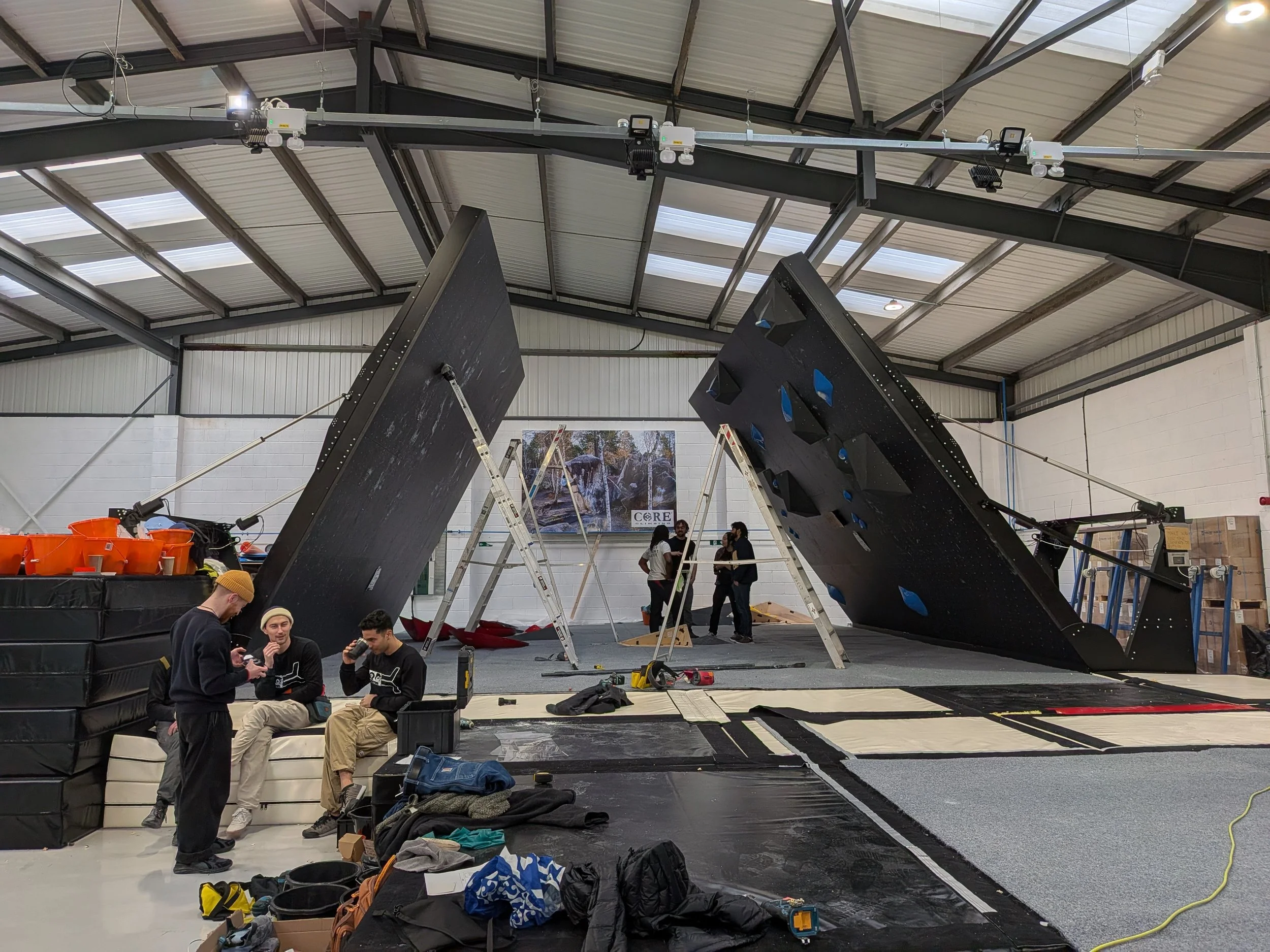
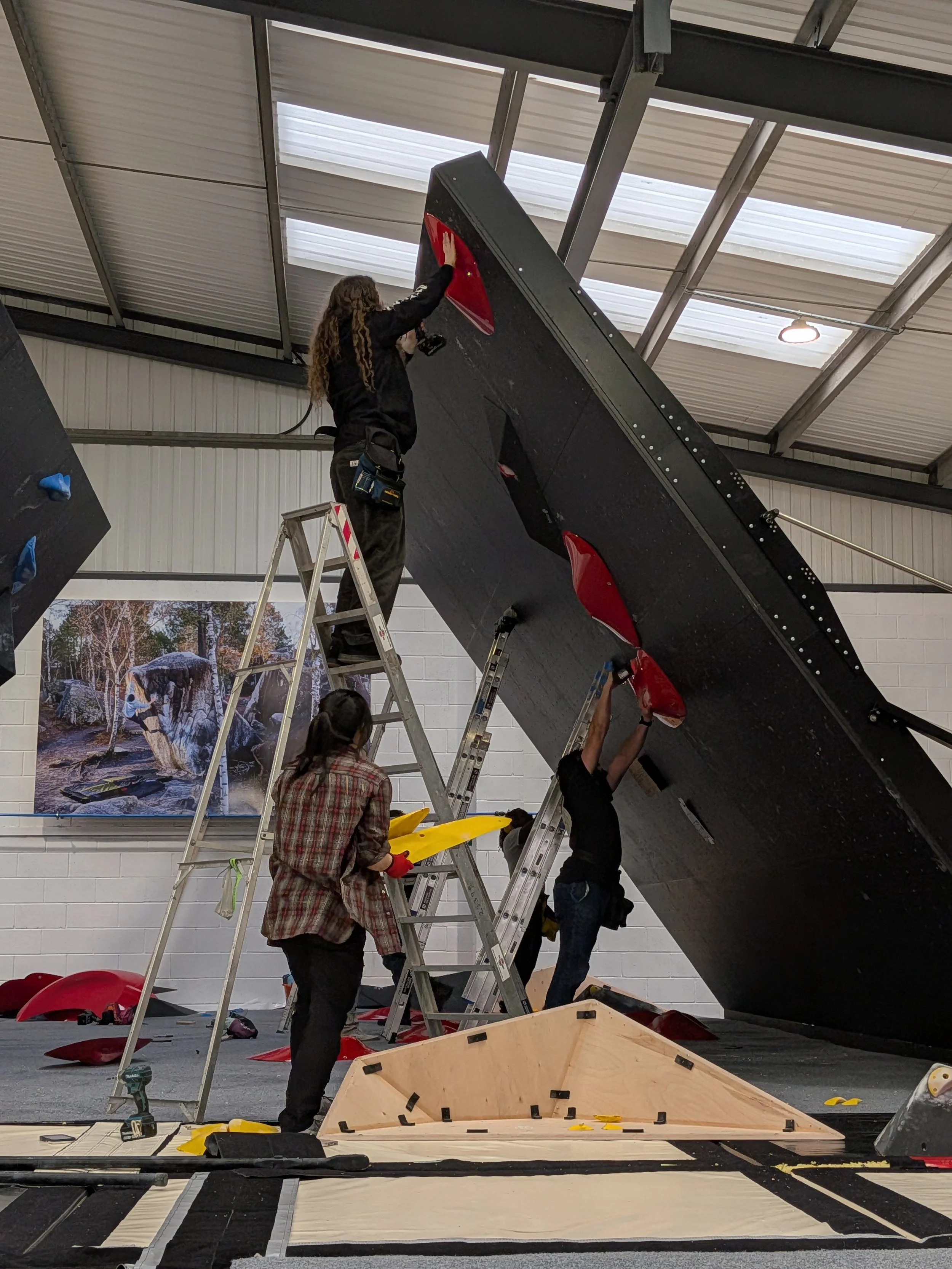
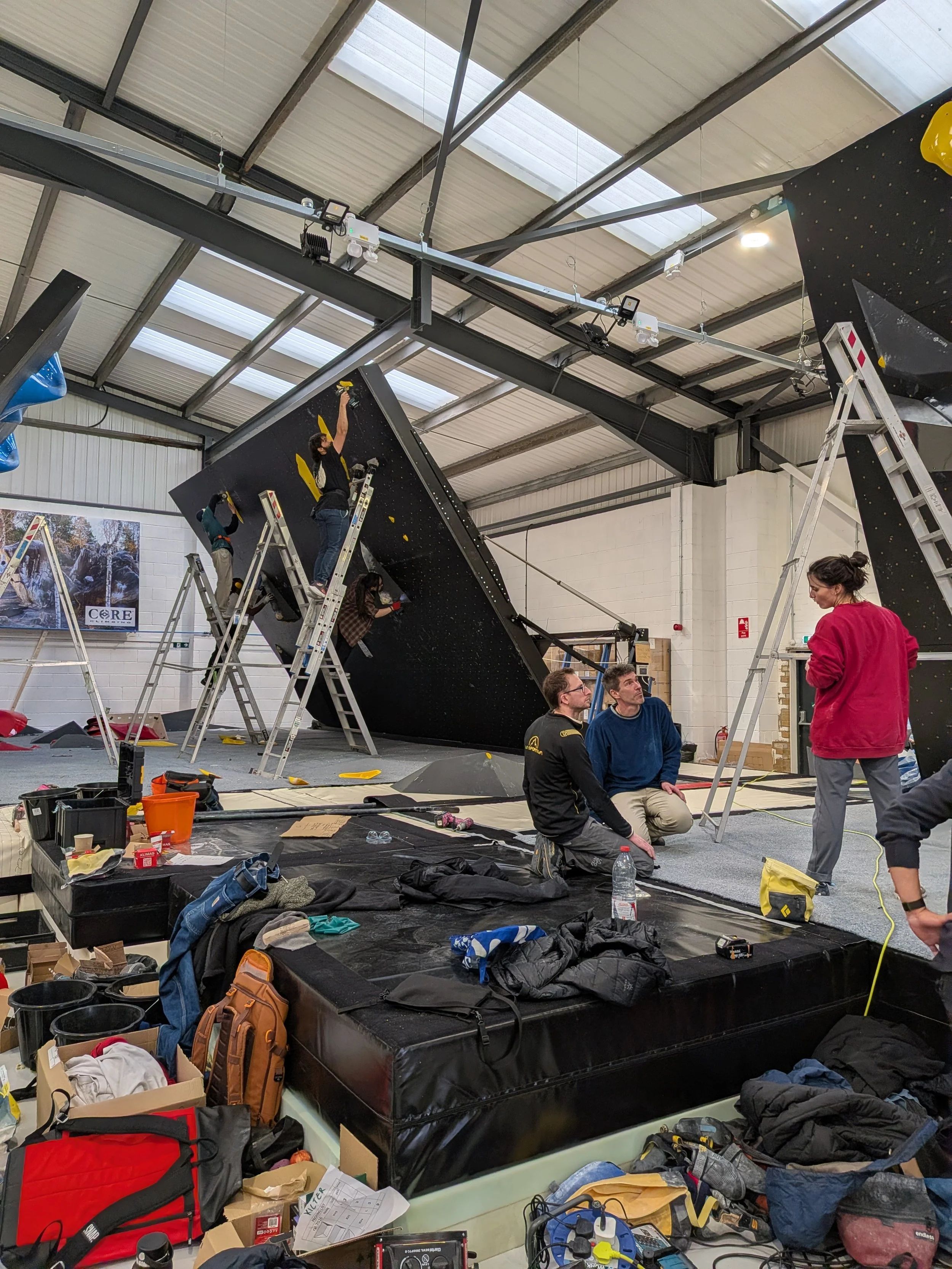
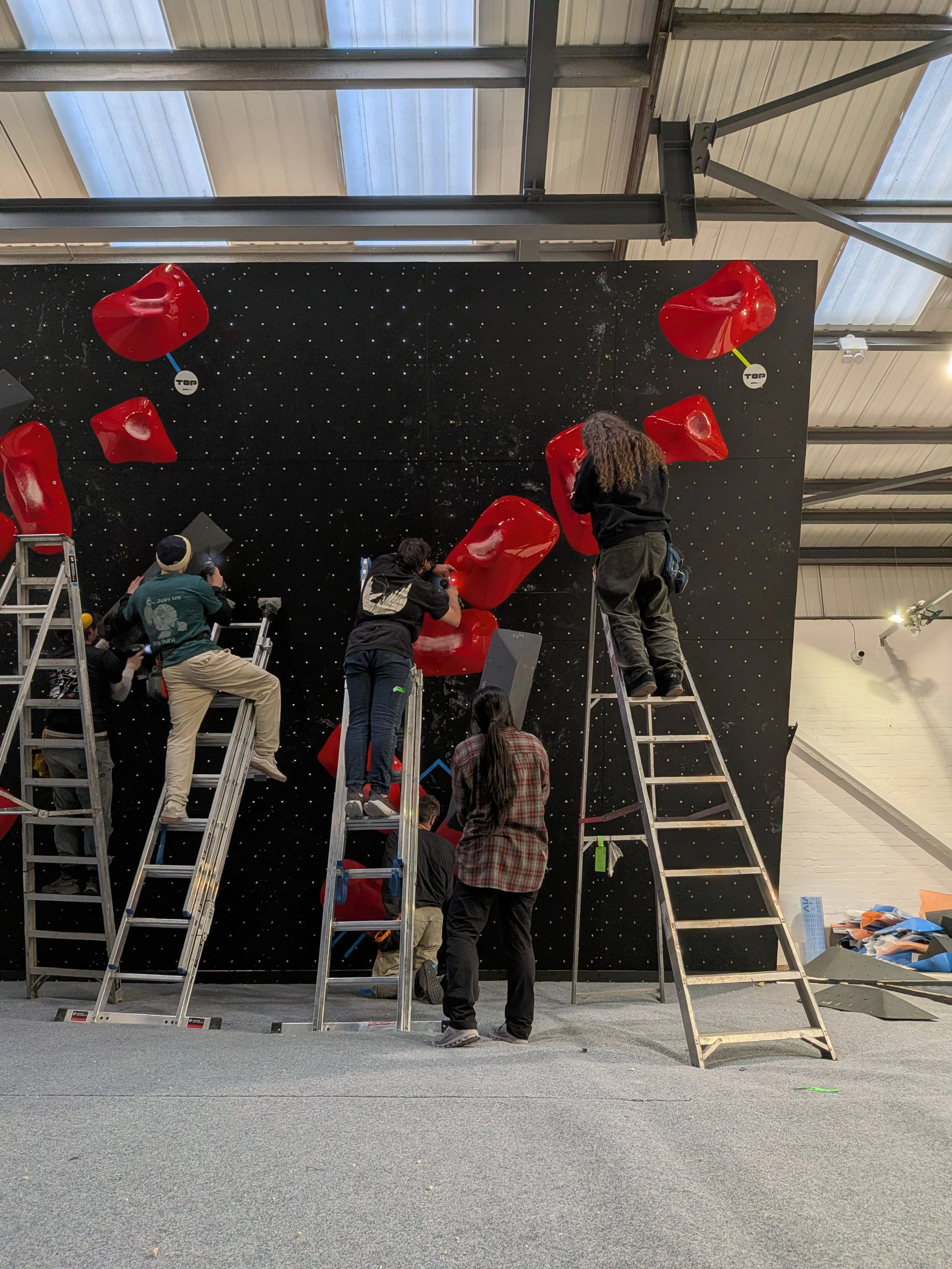
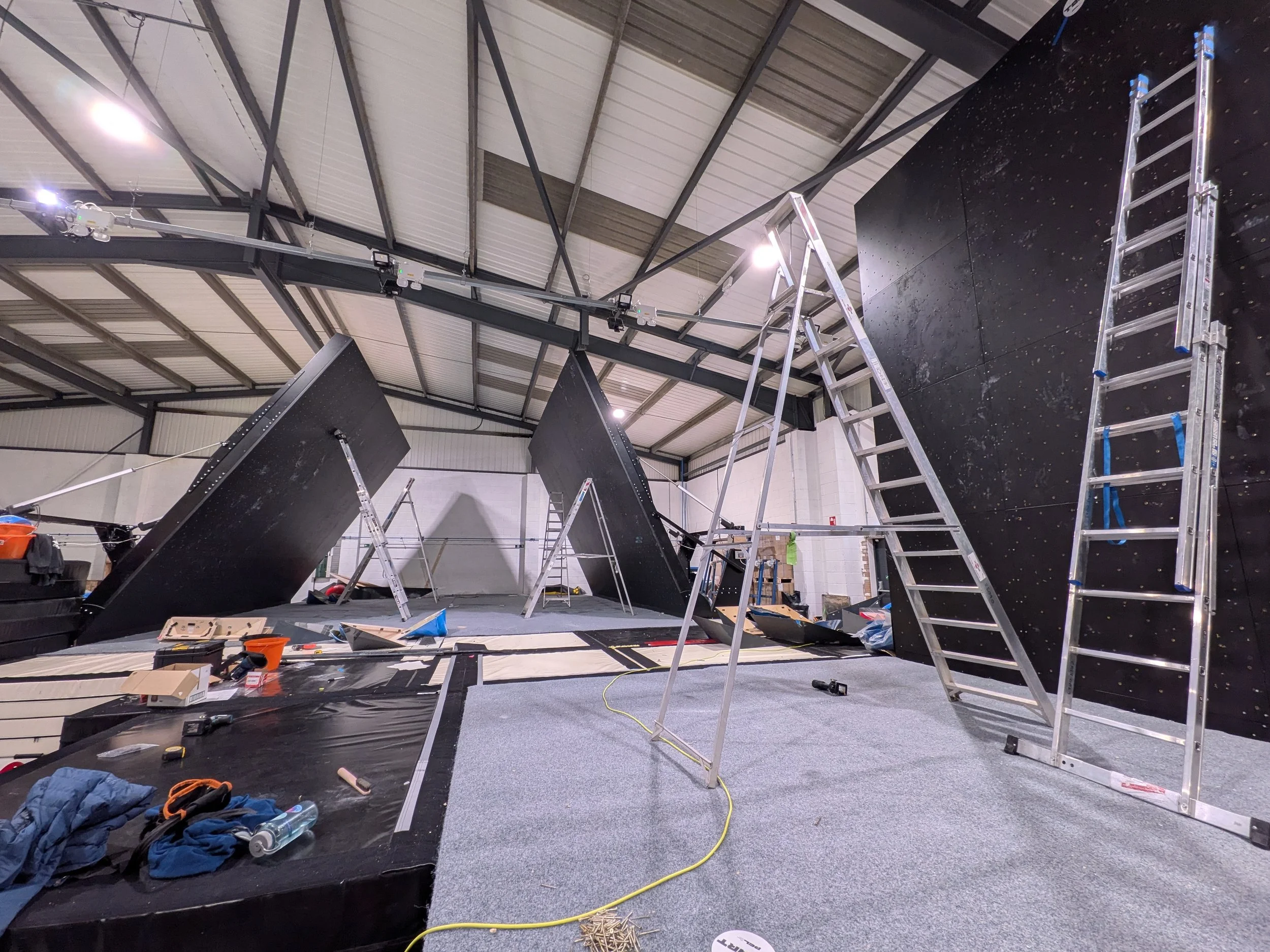
PCL co-founder Charlie Boscoe gave the team a rallying speech; He's a natural communicator, and was honest about the stakes: RedBull had negotiated a hard ten-minute changeover window, with financial penalties for overshooting it. He delivered this with enough good humour that it motivated rather than unnerved, which was the right call.
The practice sessions were revealing. Those of us with semi-finals and finals experience found the marker-setting familiar; the tighter challenge was the teamwork — defining roles, optimising workflow, finding the dead seconds and cutting them. The City Bouldering crew were quick to adapt, but it was clear that the people who were slowing the clock would need to shift into support roles: moving holds, managing staging, keeping the flow going. Hard decisions in a room full of professionals, but the right ones. We also had an equipment problem, the A-frame ladders provided for the event — standard issue in the States and Europe — felt precarious on climbing matting. In the UK, routesetters work with extender ladders and nobody was fully comfortable on the A-frames. A low-level debate about sourcing more extenders for the main event began that afternoon and would run almost until showtime.
We wrapped the day at 19:00, cautiously optimistic. I told Charlie that once we were on the actual stage — lights up, music blaring, adrenaline through the roof — everything would sharpen up. I believed it.
London, Friday 27th - Build Day
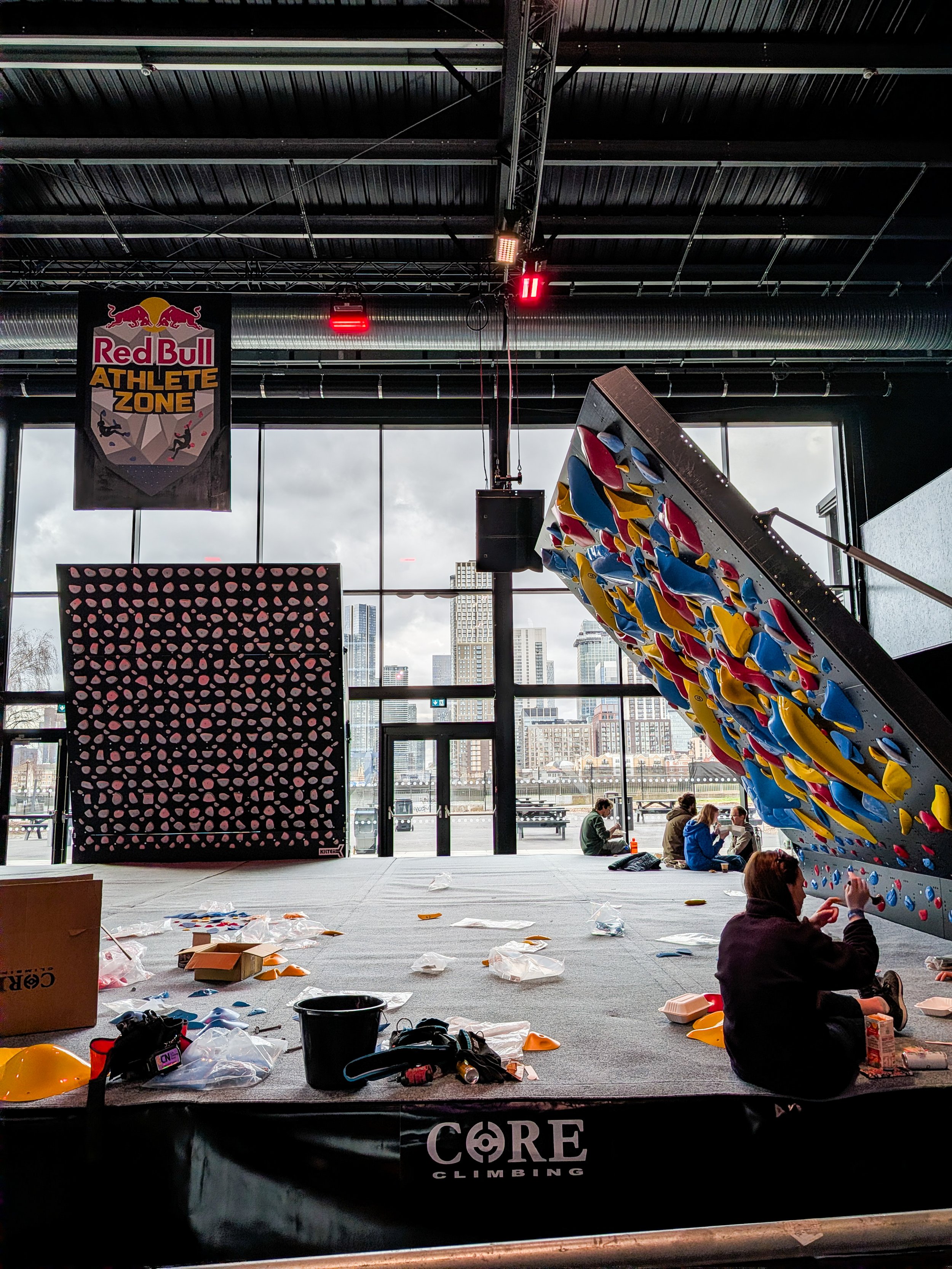
I volunteered to help wherever needed, which turned out to be the athlete warm-up area. The vision for the space was an open one that I thought of as a kind of athlete petting zoo, but the sponsor gets what the sponsor wants.
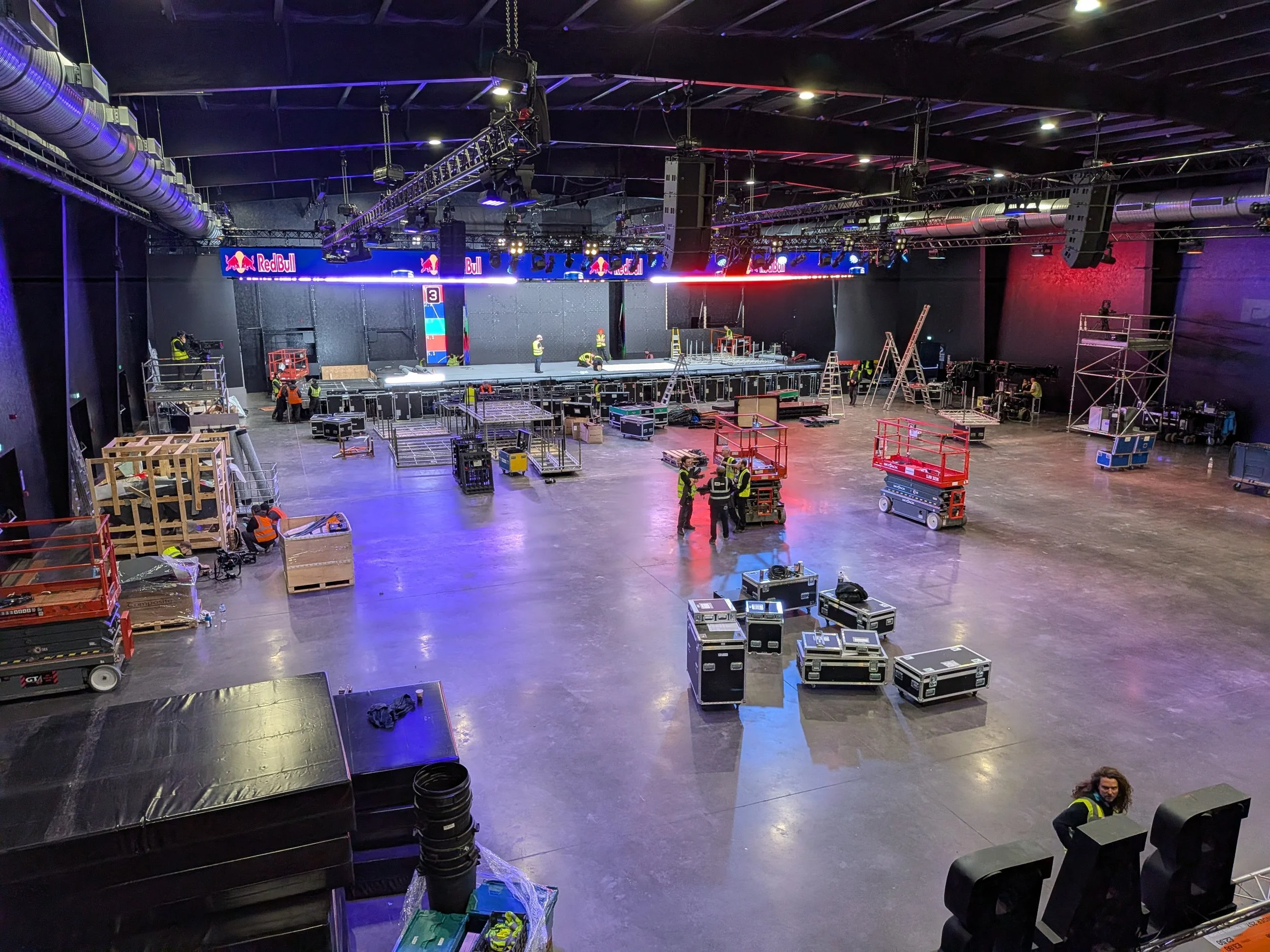
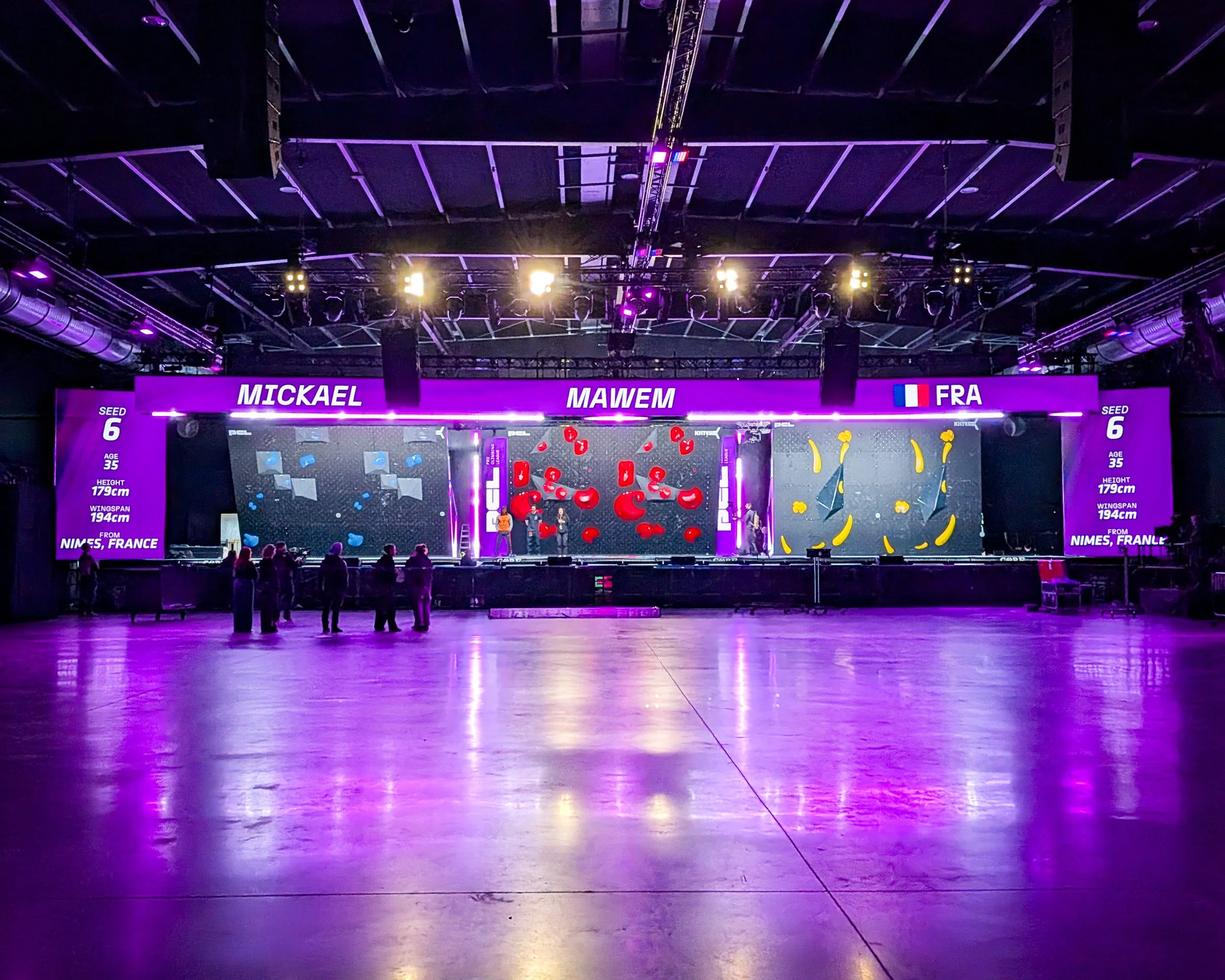
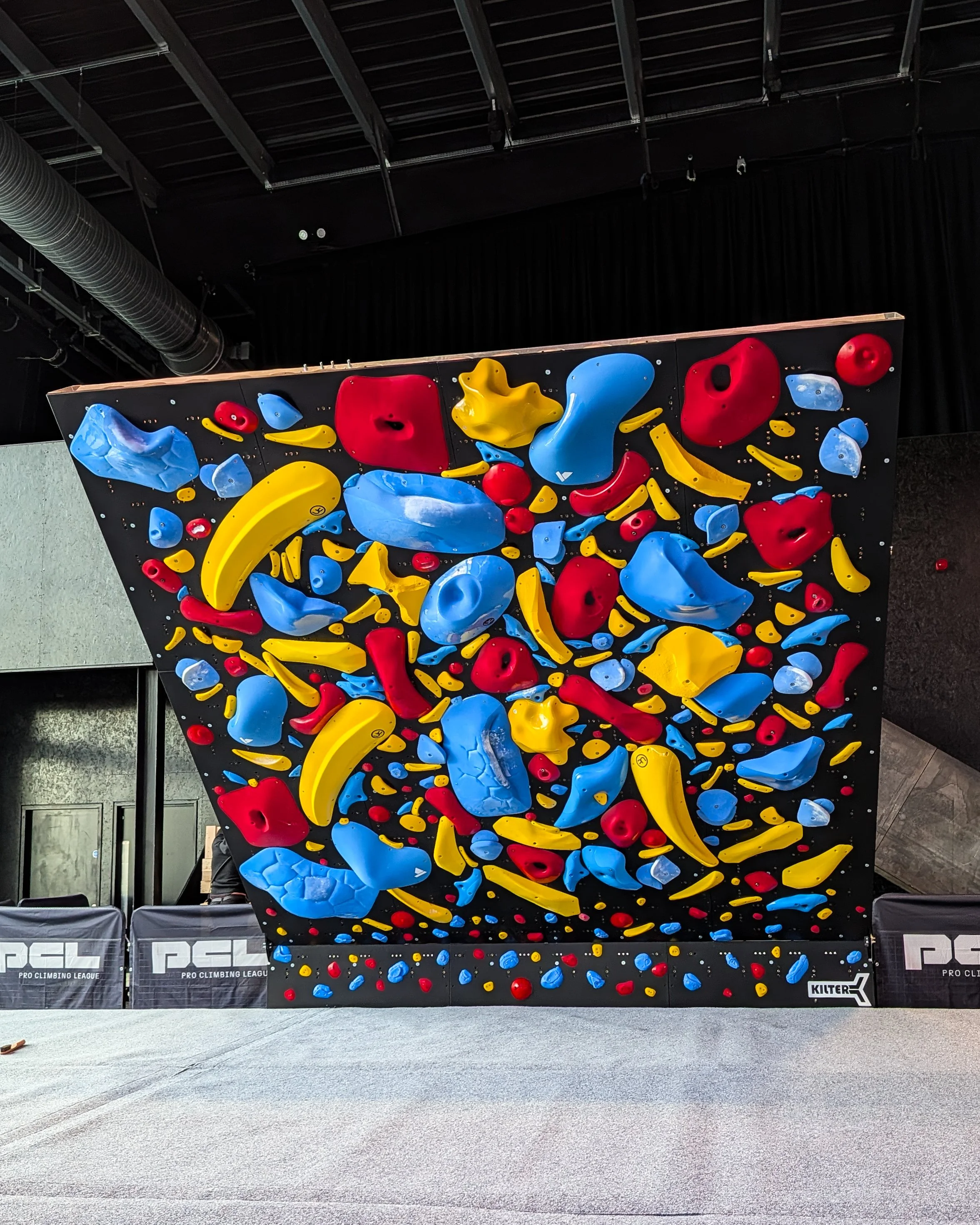
Once the FrictionWalls team had installed the adjustable boards with their steady efficiency, a small group of us — Gabri Tavallini, Will Watkins, Jackie, Miche and I — set the KilterBoard in what I suspect was close to record time. Throughout the day, the venue transformed. Magazine London is already an ideal event space; watching it accommodate a full concert-grade lighting rig, a towering PA system, massive screens flanking and overhanging the stage, and competition matting and adjustable walls filling the floor was genuinely awe-inspiring. PCL and RedBull TV were not holding back. This was going to be one hell of a show.
London, Saturday 28th - The Big Day
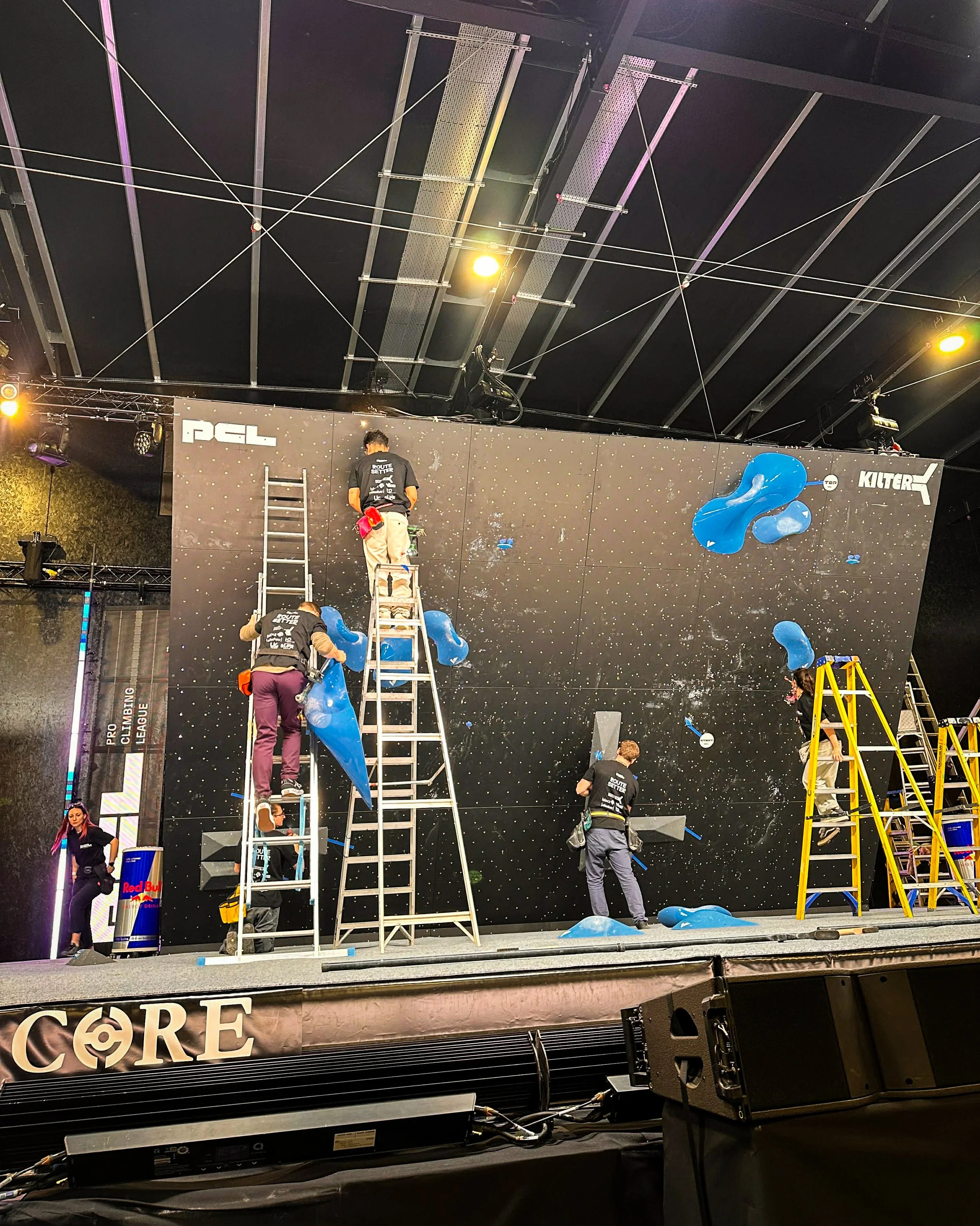
Passes collected, we head inside for a full changeover at 9am. Sagi, Charlie and Sergio each delivered sharp briefs — the ladder situation was still unresolved but would be sorted in time, they assured us. We had the stage for 2 hours to work through kinks in our workflow. With holds staged behind the walls and the team in position, a deafening bass track dropped and we went to work.
It went well until it didn't. During the first run for my team, as a volume was being lowered from the wall, an A-frame partly collapsed. The volume caught a crew member on the forehead. They were shaken, and left with an egg-sized lump, but were quickly helped by on-hand medics and were alright. The changeover continued without pause — adrenaline has a way of making decisions for you — but we missed the ten-minute mark.
A quick debrief was brisk and unvarnished: good, but better is possible. Communication was lacking, roles weren't clear enough. Ten minutes, then we go again. The subsequent runs improved noticeably. The nerves from the incident subsided, roles became instinctive, and the target looked achievable. We cleared the stage for a few hours to let the technical team work their magic, while MC Louis Parkinson ran through his lines ready for showtime. Watching the names and graphics of some of the world's best climbers — Janja Garnbret, Toby Roberts, Oriane Bertone, Tomoa Narasaki — flash up on those enormous displays made the scale of the evening suddenly very real.
At 15:00, one final rehearsal changeover. This one was on me. After dealing with a large splinter on the middle board, I left an extender ladder propped against it. In a momentary lapse, the board angle changed and the ladder wedged firmly between a hold and the matting. Precious seconds were lost extracting it, but we carried on as planned. We still hit the mark, and I told myself that would be the only mishap of the night.
The final hours before doors were a blur of tidying, branding, and setting a SprayWall in the warm-up area. The long-awaited extra extender ladders finally arrived from BethWall with not a minute to spare. A collective exhale. A-frames were not going to be our downfall tonight. Then the final brief from the stage: the event was live, thousands watching in person and online, and there was exactly one instruction — You’ve got this, fast but controlled, no mistakes.
Showtime
Spectators and VIPs streamed in. The reaction to the venue was immediate and unanimous — jaws dropped at the stage, at the screens, at the athletes on the warm-up boards. Climbers of Garnbret's and Roberts' calibre are rarely accessible, and the crowd couldn't resist. Credit to the athletes for taking it all in their stride while actually getting meaningful warm-up time in. Business as usual, for pros.
Charlie asked me backstage if I wanted to take on brushing duties between climber pairs. I hadn't planned on it. But I'd come this far, and one more memorable role in the night wasn't going to hurt.
Qualification went off cleanly, and the crowd was fully involved — Louis Parkinson working the room with the ease of a seasoned presenter. Then it was our moment. We assembled on the steps to the stage, holds and ladders ready, the noise of the crowd filling the space. Sergio called it: Go. The boards tilted to their required angles and we were moving — drivers buzzing, holds coming off, volumes going on, music at full tilt. The teamwork that had come together over just a handful of practice runs asserted itself. The blocs were staged, the mats were cleared, and it was done.
Sweating and gasping for a drink, we hit the mark. Nobody died. It worked!
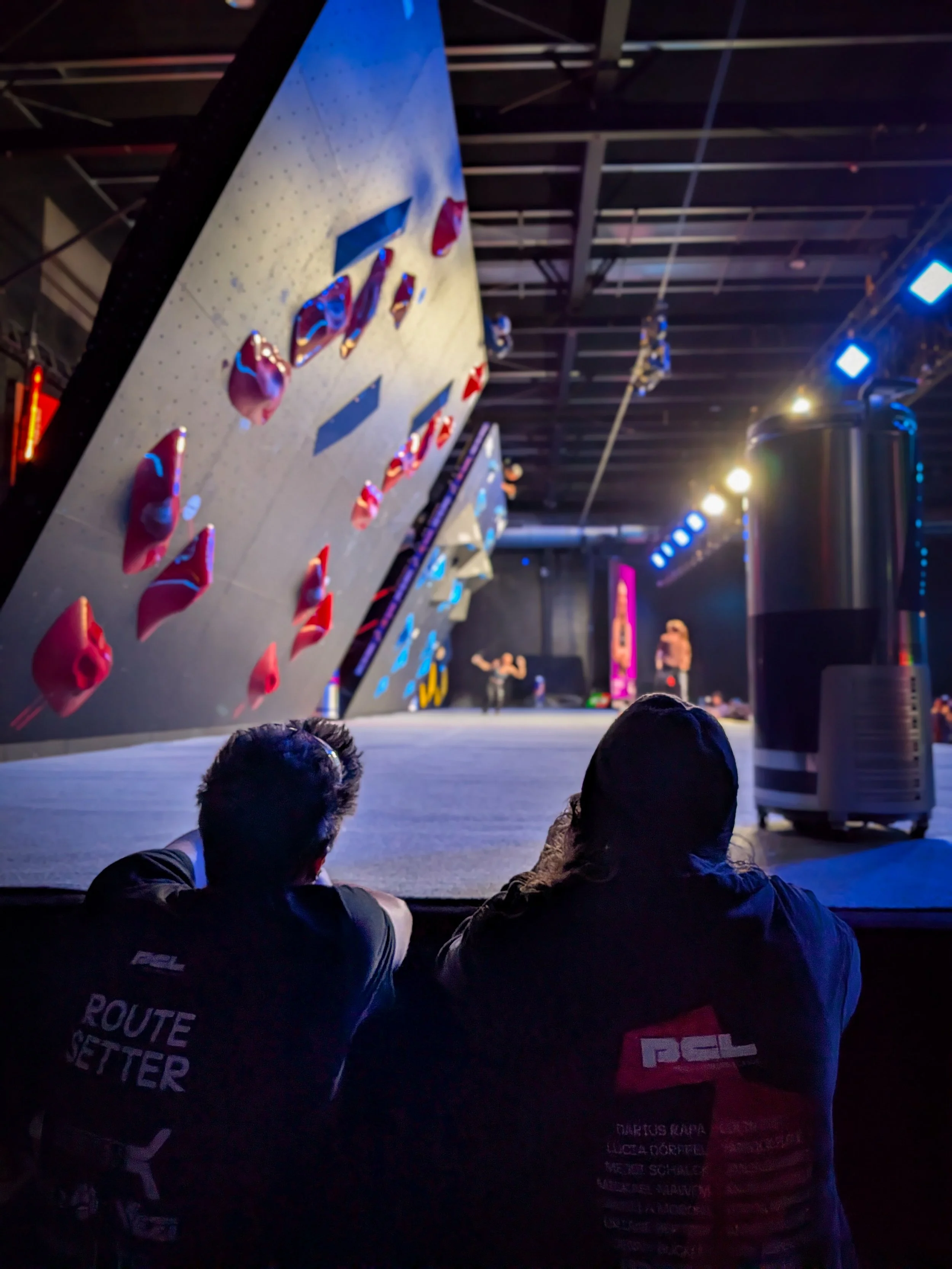
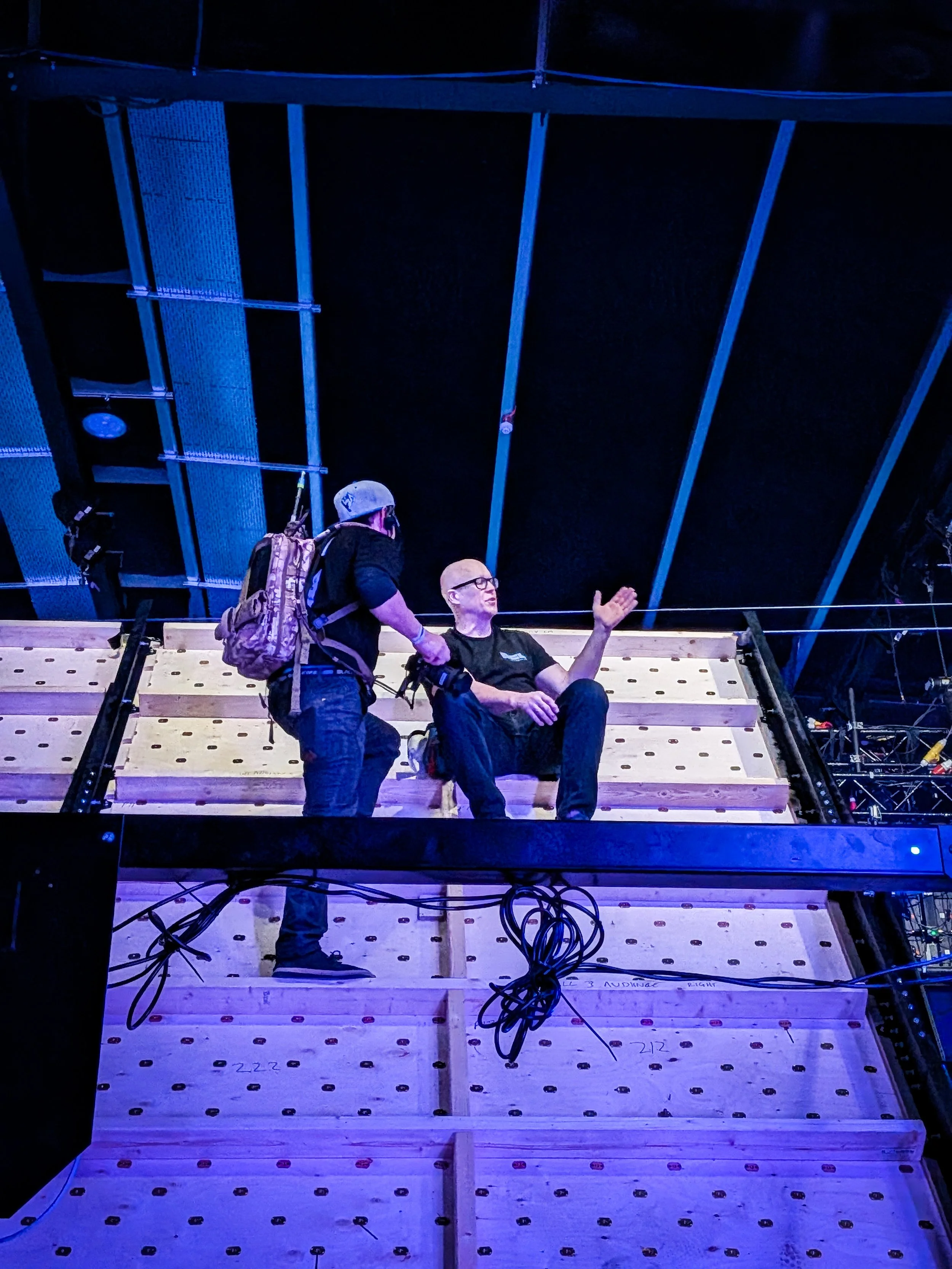
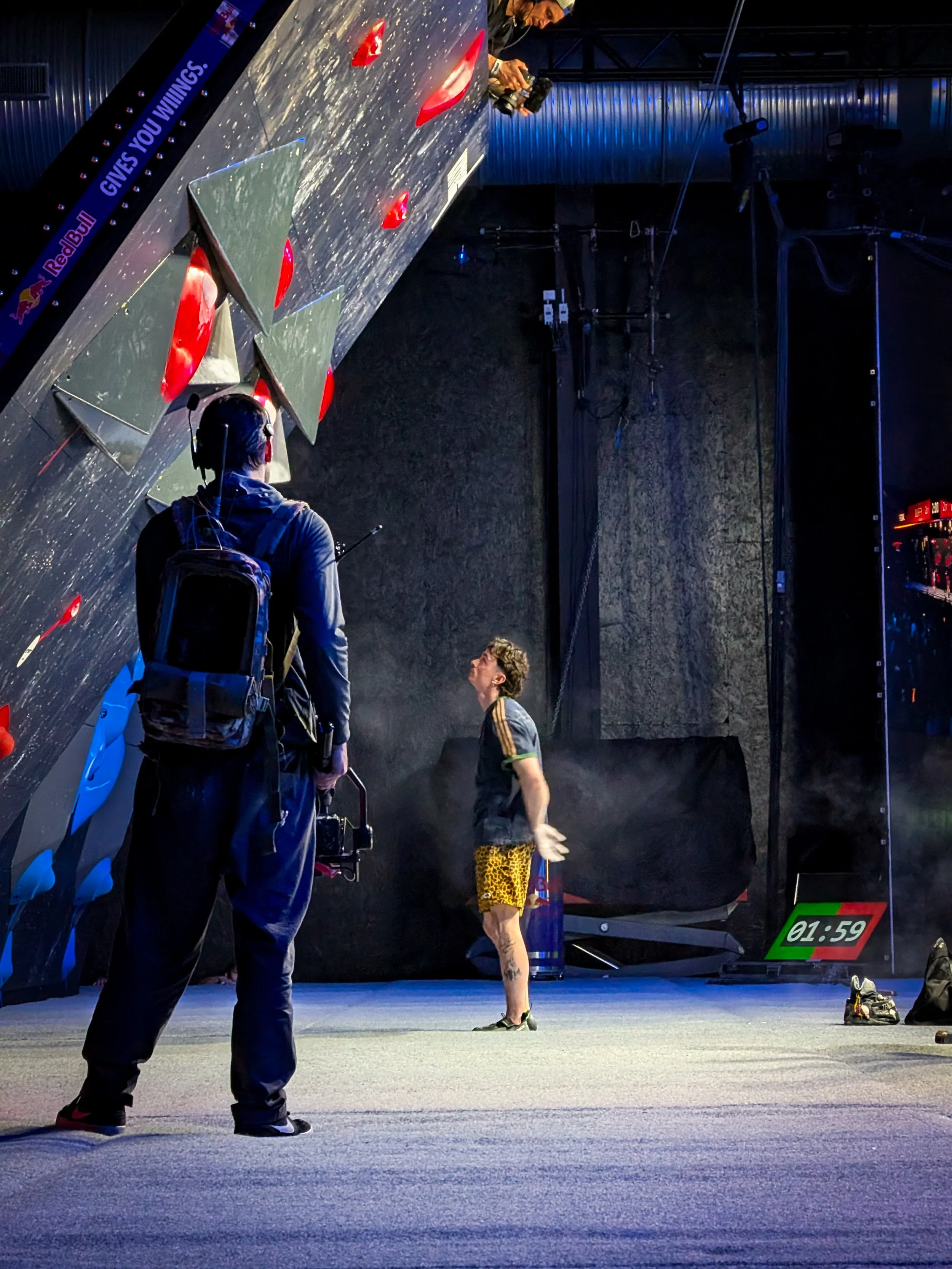
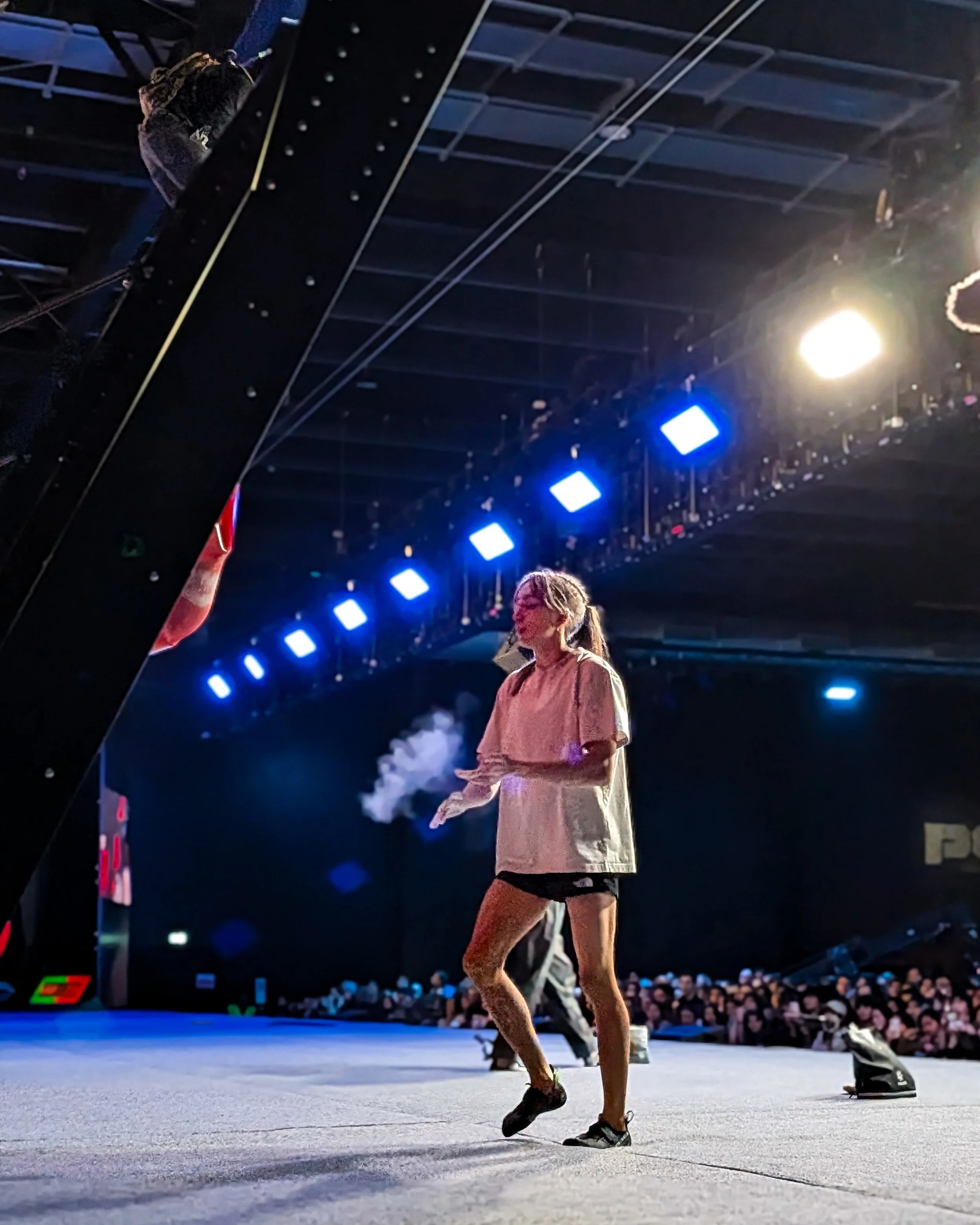
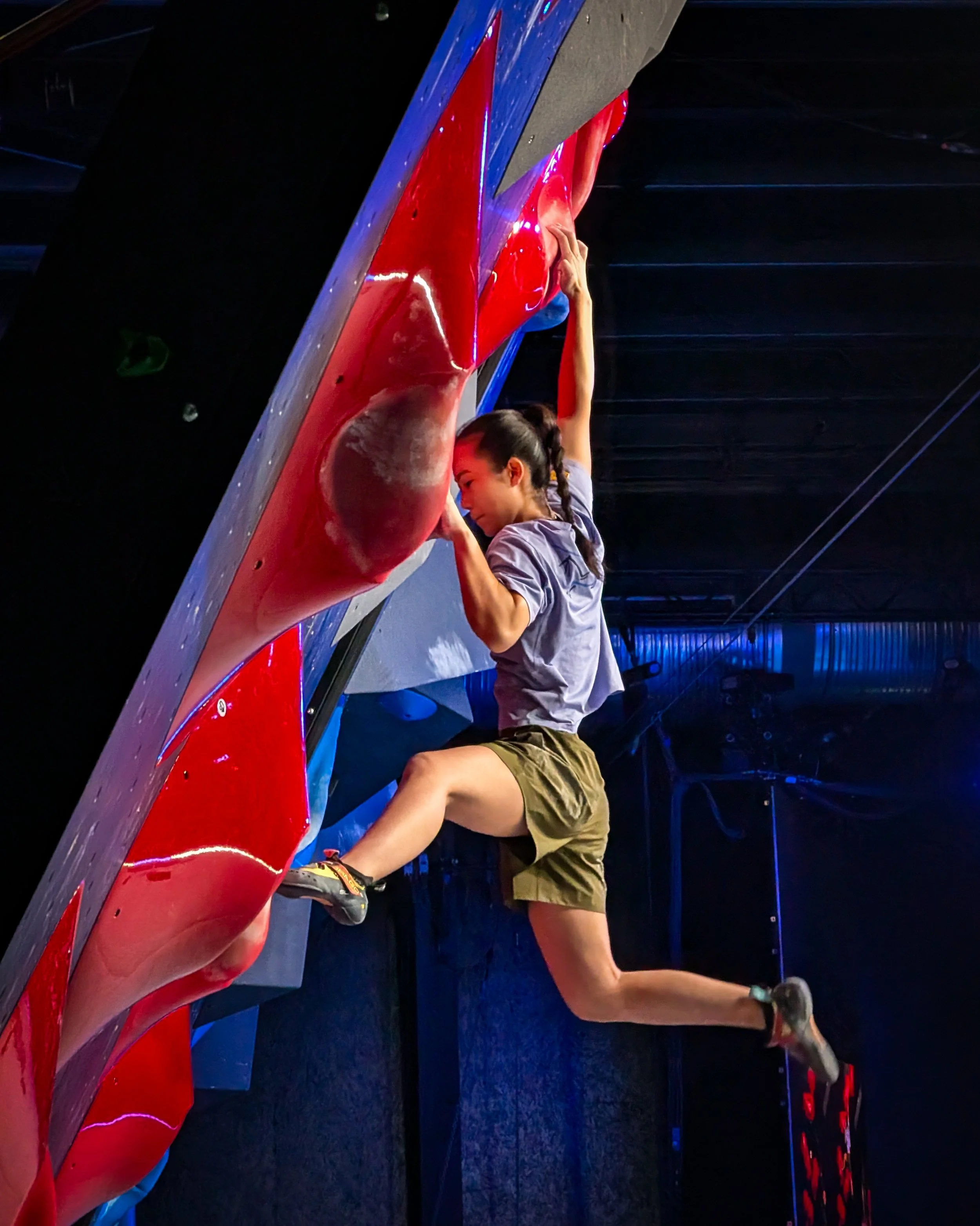
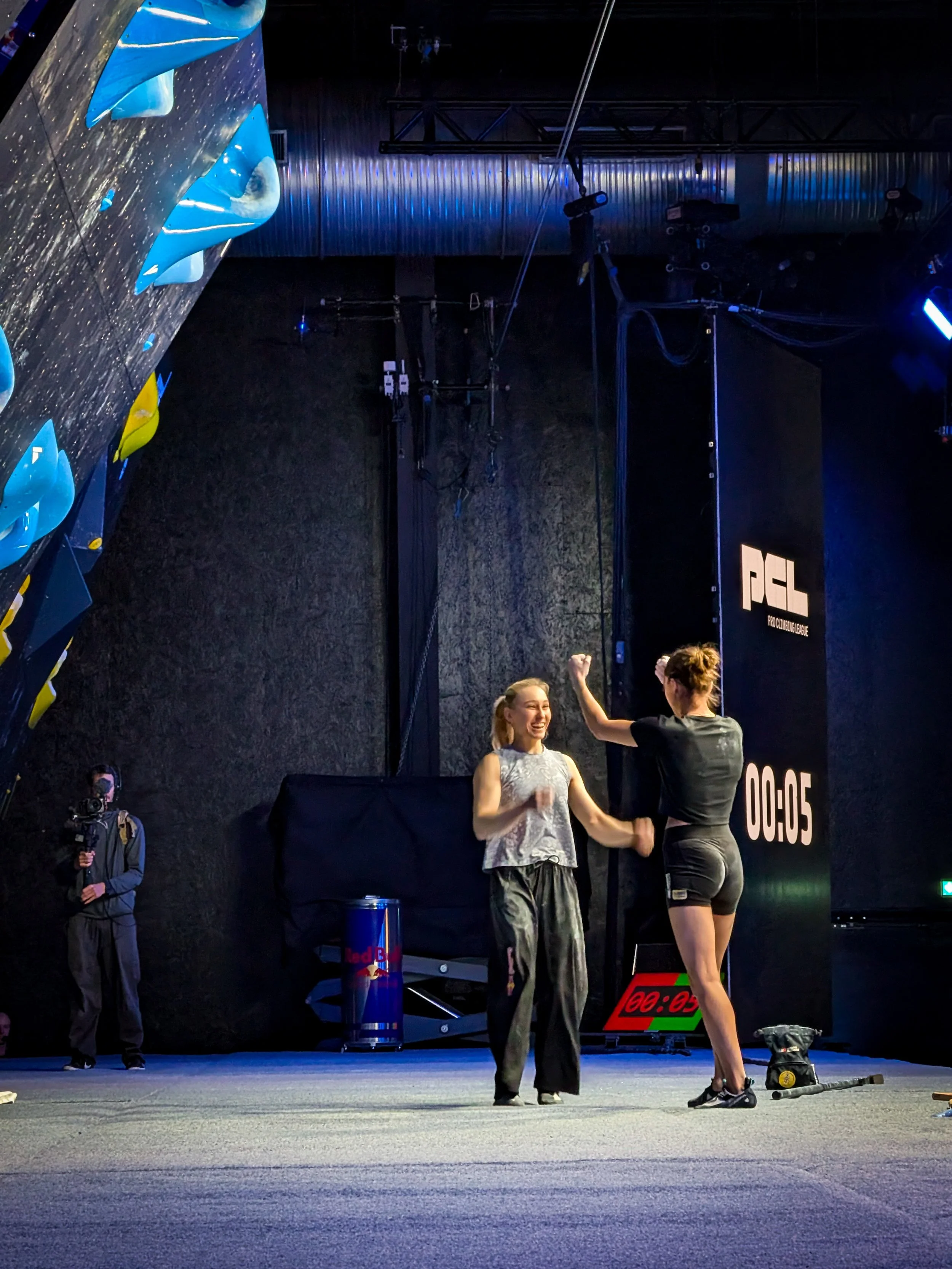
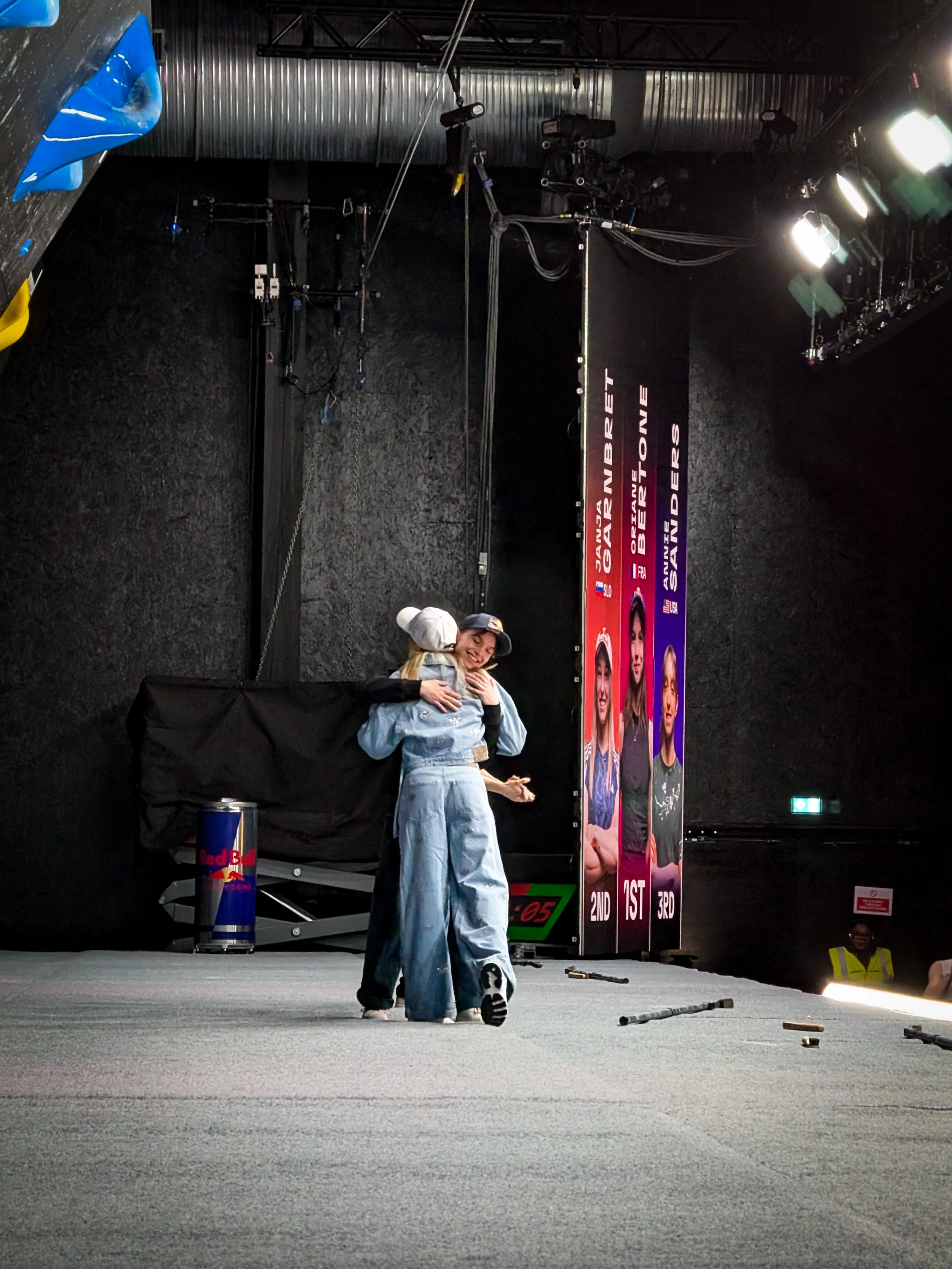
The rest of the night ran in a kind of heightened blur — bright lights, loud music, intermittent bursts of intense activity between the excitement of the rounds. We wanted to see the climbing just as much as anyone in that room, stealing glimpses from the side of the stage. In those moments, watching Charlie, Jackie, and Ian (not forgetting to mention Danaan!) take in the event they had spent two years building, the proof of concept finally made real — it was hard not to feel genuinely moved by it.
There are lessons to take away. The A-frame situation needed resolving earlier; a lot of dead time during the event with standing spectators enduring for over 3 hours, and the quirks of a brand-new event format will always surface things that rehearsal and schedules can't fully prepare for. The organisers know this, and they'll be better for it. I hope PCL’s backers, including RedBull, have seen the value in the event and provide it with turbocharged approval to go bigger and better.
As inaugural events go, the Pro Climbing League's debut was something special to be part of. A world-class field, an ideal venue, a genuinely novel format — and somewhere in the backstage chaos, a dedicated crew frantically making sure the whole thing stayed on track.
